3d mutimedial exhibitional narrative
In recent years, several institutions have been using the exhibition tool as a means of communicating with the public, the use of which is largely empirical.  The traditional notion that an exhibition is exclusively related to museums and other related institutions, with a pre-existing collection of objects and dealing with only a limited range of "cultural" issues, deprives society and its collective institutions of a powerful tool for communicating with both permanent residents as well as with Greeks and foreign visitors to a place. The acknowledgement of the fluidity of the act of exhibition, in combination with the now indisputable advantages of the use of digital technology in an exhibition environment, create the need for the systematic study of exhibition practice as a tool for the production of a multimedia narrative, in order to function effectively and serve the communication needs of an institution, taking into account its special features as well as the available, each time, budget.
The aim of the research project is to formulate a holistic methodology towards the creation of a Three-Dimensional Multimedia Exhibition Narrative (T.M.E.N.), which can be applied and adapted according to the needs of each institution and in each area of interest. In order to do this, the following objectives can be identified:
1. In-depth exploration of the narrative possibilities of the exhibition practice: The use of the exhibition tool by institutions that do not belong to the category of "cultural" ones (e.g. Municipalities, Regional Unities, Businesses, Scientific institutions, etc.) creates the need to explore and capture its narrative potential, at the level of exhibition practice. This study will be combined with a wide range of potential stakeholders, as well as with the target audience (e.g. locals, visitors, Greek and foreign tourists, individual social groups, etc.).
2. Exploration of the potential of a wide range of narrative tools (photography, object collections, video, sound, augmented reality, digital applications, graphic design, installations/constructions, etc.), in the context of exhibition practice, with the aim of aptly selecting and managing them during the exhibition formation.
3. Organization of a basic, flexible and scalable, technical toolbox, consisting of appropriate, state-of-the-art equipment (projectors, touch screens, computers, portable electronic devices, audiovisual apparatuses, etc.), in order to be used, under conditions, by institutions willing to formulate an exhibition.
4. Both the diversity of the character and the objectives of the stakeholders, as well as the differences of the audience to which each of them addresses create the need –and simultaneously the challenge– for the establishment of a systematic methodology, for the right selection, design, implementation, and evaluation of a T.M.E.N.
The desired outcome of the above is the composition of a creative core at the University of the Aegean that will develop a network of relationships and contacts with all stakeholders, inside and outside the Region of the North Aegean, to combine state-of-the-art research in the field of exhibition design, with its immediate utilization by society. For this reason, the action is addressed to all stakeholders with similar interest, regardless of available budget or dynamics of previous actions. In addition, the possibility of implementing an exhibition through online cooperation and transfer of the necessary equipment to the spaces of each institution, removes any geographical restrictions. Thus, it is possible to formulate an exhibition, following the above mentioned methodology, to each interested institution, turning the element of insularity and distance from a disadvantage into a potential advantage.
Based on the above, the actions and goals of the implementing body of an exhibition will be able to be communicated more thoroughly to each audience, since the each time selected narrative will be specifically tailored to the needs and character of the institution and the characteristics of the target audience. The audience to which an exhibition is addressed each time, on the other hand, will have the opportunity to browse an original exhibition and to be informed about the topic of choice of the organizing body, through a modern way of exhibition narration. Finally, the creation of original exhibition narratives will be an attraction for visitors to the area.
After the completion of the project, the services that will be offered to the interested institutions will include:
1. Systematic information of the potential beneficiaries regarding the possibilities of utilization of T.M.E.N. for specific general and/or special and/or time-limited needs
2. Provision of highquality innovative exhibition products based on the formulated methodology of design, development and evaluation of T.M.E.N. in combination with the special needs, capabilities and limitations of each institution and audience group.
3. Ability to use, under conditions, the technical toolkit in order to support specific ideas, as described above.
Head of the research group: Nassia Chourmouziadi.
Research team: Eleni Galani, Fotis Ifantidis, Elli Karkazi, Konstantina Nikolopoulou, Alexandros Tourtas. 
Museological research for the establishment of an archaeological
museum in Grevena
Travelers, archaeologists and historians have in the past referred to the region of Grevena as a "terra incognita".  The recent archaeological research, however, brings to the fore multiple facets of the human activity in the area, spanning from the Paleolithic era to Late Antiquity, yet still unknown to the public.
The implementation of the archeological museum in Grevena was assigned in 2020 to the scientific team of the Museolab laboratory. The thorough processing of the archaeological data, the on-site recording and touring, as well as the research and theoretical evaluation of current museum practices led to the composition of the script web of the submitted museological exhibition.

There are five main narrative elements highlighted in the proposed exhibition: the fragmentary nature of the archaeological information, the element of "exploration" of the past, the direct connection of the above with the landscape, the recognition of the concept of constant movement as a dominant feature of human action in the region and, finally, the holistic and multi-temporal approach of this cultural palimpsest.
The museological research proposal was materialised in the frame of the European Territorial Cooperation Programme INTERREG IPA CBC, GREECE-ALBANIA 2014-2020.
Head of the research group: Nassia Chourmouziadi.
Members of the research group: Elli Karkazi, Konstantina Nikolopoulou, Anna Papatheodorou, Fotis Ifantidis.
Museological research for the establishment of a cultural museum in Grevena
The creation of a permanent exhibition that would present the daily life and the history of the Grevena Perfecture in modern times proved to be a challenge, right from the beginning. 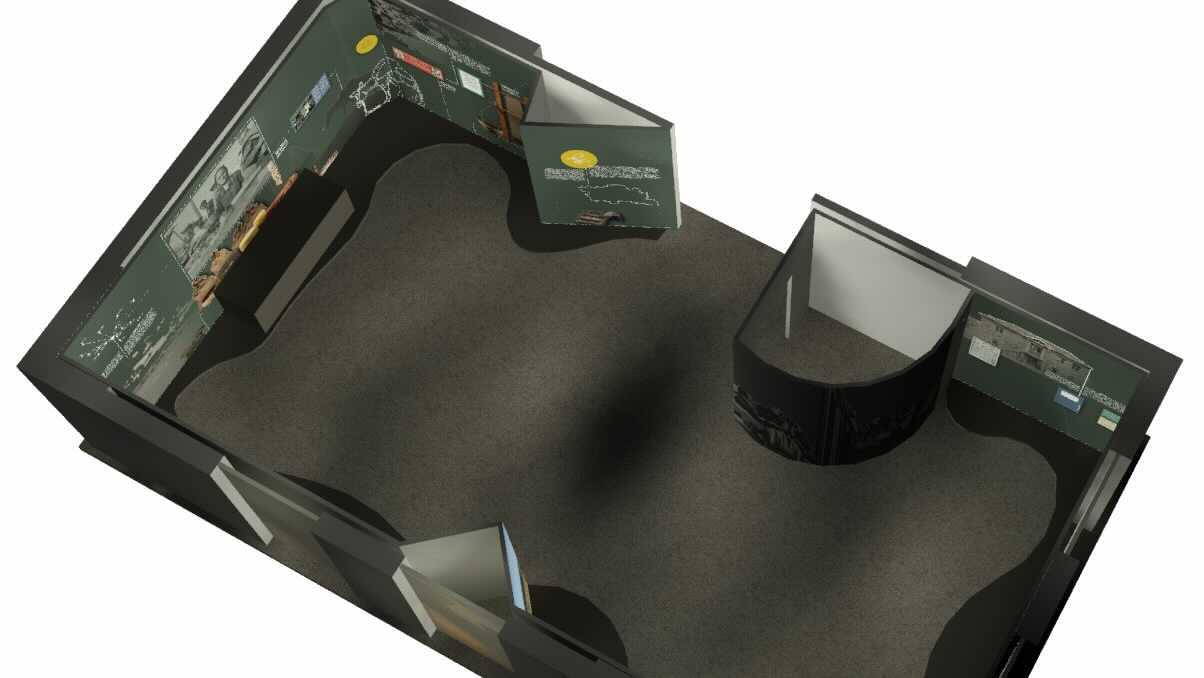 The limited research publications, the scarce and unedited archival records, the numerous unofficial documentations and testimonies preserved by the locals, the large number of unidentified and uncataloged objects waiting to be exhibited and the almost completely unapropriate building available, made clear that we had to deal with a difficult task.
On the other hand, there were the unique landscapes of the area under research, a permanent passage for the merchants and the craftsmen of the previous times, enriched with history and special cultural elements, and inhabited by people who love their home and seak to place firmly their identity on the map.The fragmentary information, the quite interesting geomorphology of the area and the sense of mobility became our main guides, so as to propose an innovative narrative composition, breaking free from the folklore scenography that one usually confronts in a so-called folklore museum.

Objects, audiovisuals, soundscapes, oral histories, images and archival material, are mixed in an innovative exhibitional scenario, where the visitor is invited to become a modern traveller, interact with the exhibits and discover this "terra incognita".
The museological research proposal was materialised in the frame of the European Territorial Cooperation Programme INTERREG IPA CBC, GREECE-ALBANIA 2014-2020.
Head of the research group: Nassia Chourmouziadi.
Members of the research group: Elli Karkazi, Konstantina Nikolopoulou, Anna Papatheodorou, Fotis Ifantidis.
CRITICAL MAPPING OF THE ARCHAEOLOGICAL PRODUCT IN GREECE
The research objectives of the program can be summarized in:
• the multidimensional study of the process that forms the archaeological product in Greece
• the deployment of critical mapping to visualize the procedure on an electronic contextualized map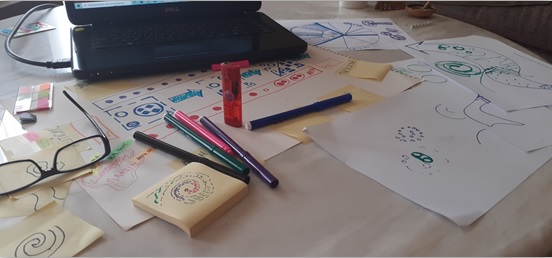
The term “map” does not refer to a map based on the model of natural sciences or on the objective representation of reality, but mostly on a critical map that works as a comment and illuminates the complex matrix of dominant concepts, ideas and interrelations of the archaeological system of production.
Putting in context each one separate unit of this multidimensional network, we hope to reveal its panoramic view through a critical prism. A contextualized panorama like the above bears the potential of uncovering intellectual patterns that define participants’ behavior and determine the image of archaeological discipline and historic culture of Greek society, but also the defining mechanisms of the product and its consumption.
The analytic critical approach of the production system constitutes a basic presupposition for “reposition” guidance to everyone involved. The critical map produced will illustrate a snapshot, to begin with, but its digital background will also form the base of a continuous and dynamic procedure of enrichment that can continue to evolve even after the completion of the research. It is for this reason that we aim at ongoing commenting digital abilities, collecting of extra data and maybe even controlled intervention from a wider interested party. We regard the map as an excuse for sincere dialogue concerning Greek archaeological reality and not just as an accomplished research outcome that statically depicts a given production system.
The conceptual framework of the research revolves around aspects of archaeological ethnography, autoethnography, critical mapping and militant research that complement each other and offer us a wide, conducive range of investigation.
K. Daravigka (PhD candidate) - Researcher
A. Chourmouziadi (Academic Consultant) - Supervisor
I. Stavridopoulos (PhD) - Researcher
Project's implementation: 02/2020 - 12/2021
ΕΔΒΜ 103 - "Υποστήριξη Ερευνητών με Έμφαση στους Νέους Ερευνητές - β κύκλος"

Narration: Integrated system for management and curation of digital
content and production of personalized and collaborative narratives
The “Narration” project involves the creation of an integrated system of digital content management and editing and production of personalized individual and collaborative narratives. The project is co-funded by Greece and the European Union- European Regional Development Fund (ERDF) within the operational program Competitiveness- Entrepreneurship-Innovation (ΕPAnEK).  Traditional narrative practice addresses narrative development by placing artefacts on a linear axis. The existence of a unique narrative flow that is fixed and remains static for a long time is not desirable, whilst it is desirable and necessary each artefact to be involved in more than one narratives, be combined with other objects and multimedia and include personal experience of the general public, which until now does not participate in narrative production processes.
The “NARRATION” project concerns the development of a platform that is able to support, manage and promote digital content of cultural and tourist infrastructures (tourist sites, museums, archaeological sites, exhibition spaces, etc.) through the creation of personalized individual and collaborative narratives. Access to narratives is possible either during a physical visit of an infrastructure during its regular operation (such as permanent exhibitions) and/or its temporary events (such as periodic exhibitions) or remotely. The project reveals cultural content by implementing new narrative structures, less strictly defined scenarios, automated and semi-automated modes, by overturning time sequences and by offering a variety of filtering and grouping options in order to respond to modern perceptions of versatile objects and their multiple interpretations. The system allows specialized and non- specialized users to produce narratives based on the available content and to share them with targeted audiences.
Project Partners:
-Museolab-Museology Laboratory, Department of Cultural Technology & Communication, University of the Aegean
Head of the research group: Nassia Chourmouziadi.
Members of the research group: Eleni Galani, Marios Ioannidis, Vlassios Kassapakis, Vicky Katsamaka, Konstantina Nikolopoulou, Alexandros Spathis, Erasmia Tzanaki.
-National Centre for Scientiic Research "Demokritos"
-ΑΙΓΑΙΟΥ SOLUTIONS Culture of Innovation
Project's implementation: 06/2018 - 06/2021